Kildee on life after Congress: ‘I don’t really think I’ve ever changed jobs in my life’
Former Michigan lawmaker says his professional purpose has remained the same
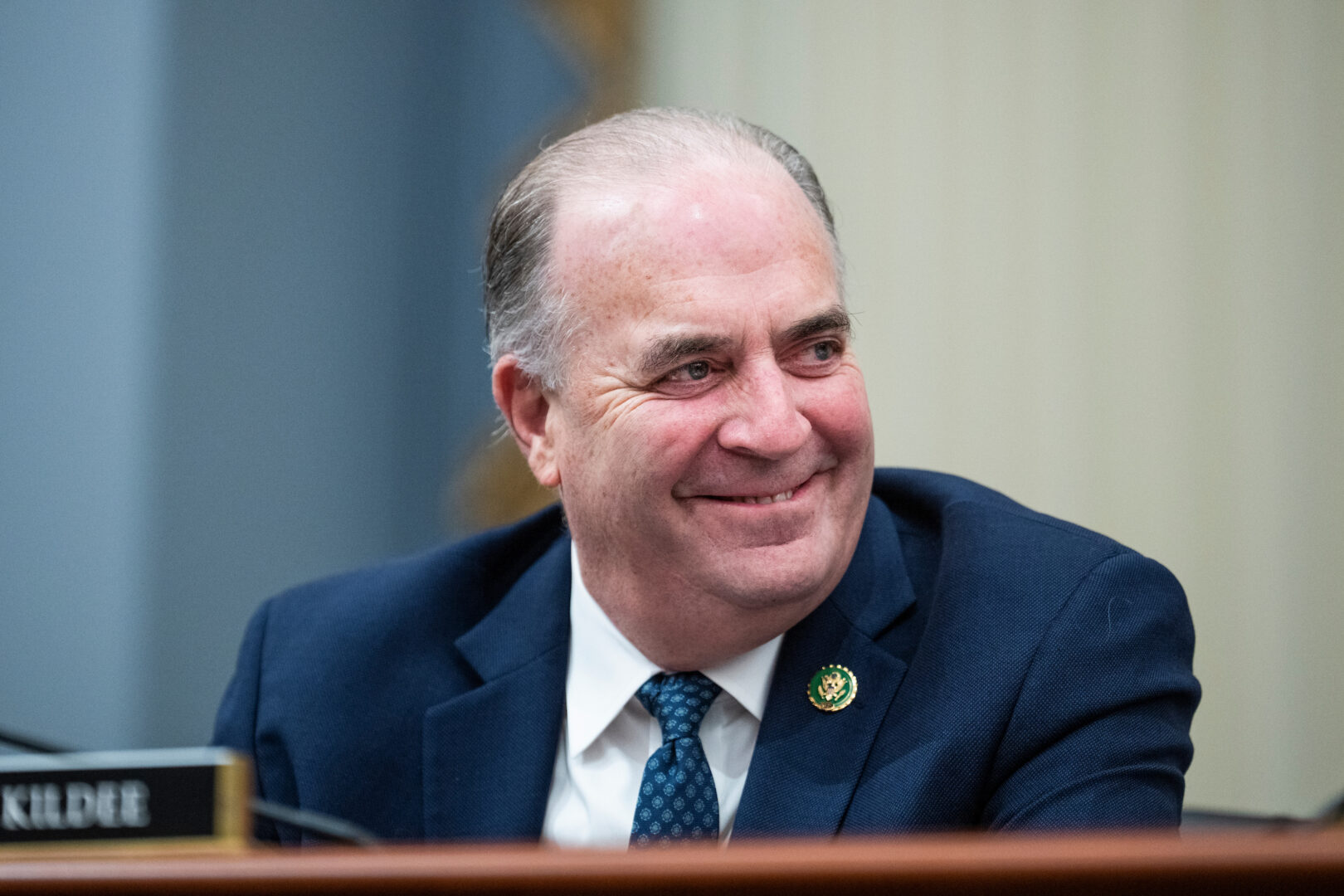
More than a year after he left Congress, former Rep. Dan Kildee’s life — from the outside, at least — looks remarkably similar to how it looked before he served.
His office building at the Community Foundation of Greater Flint, in Michigan, is just a few buildings away from the office where he served as county treasurer and founded the Genesee County Land Bank in the late 1990s and early 2000s.
His commute home each night is about 13 minutes.
He’s even still doing some work on land use issues, which was a centerpiece of his pre-congressional life.
“I don’t really think I’ve ever changed jobs in my life,” he said, acknowledging that “some jobs have a longer commute and a different toolbox.”
Still, some things have changed.
Kildee, 67, a Michigan Democrat who served a district that included his hometown of Flint from 2013 through 2025, admits that he’s now informed by the perspective he gained in Congress.
“I’ve come to understand that my community has assets and deficits, ” he said, “and I think a lot of places like Flint tend to focus most of their attention on the deficits.”
He said while the problems can seem overwhelming when you’re focused only on your own hometown, “what I can see now is that we, my own community has so many assets that other communities would really like to have.”
“I have a better sense of what we have that we can build from.”
Post-Congress, Kildee serves as president and CEO of the Community Foundation of Greater Flint, a nonprofit that aims to lure philanthropic investment into the community. It’s the latest in a long career full of work dedicated to Flint, including stints on the board of education, the county commission, county treasurer and founding the Genesee County Land Bank.
“I get to do all the cool stuff that I used to do when I was in Congress, which is, like, getting resources to organizations and people in my community,” he said. “But I get to do that without all the other stuff that comes with being a member.”
He used to go on CNN or MSNBC to talk politics. Now, he talks to his students at Central Michigan University, where he serves as the Robert and Marjorie Griffin Endowed Chair in American Government.
“I can just get in front of a classroom and have a conversation with students,” he said. “It’s great.”
Changes in Congress
Kildee said when he came to Congress in 2013, a lawmaker’s success depended on factors like the number of bills delivered to the president’s desk, the number of amendments adopted, the amount of casework completed.
“But now there’s a whole set of members that quantify their success based on, you know, the number of clicks,” he said. “The measures of success have changed. And you know, I will say that those who don’t want government to work tend to succeed in that kind of space.”
He said people ask him nearly every day if he misses Congress.
“And the best answer I’ve been able to derive, which I think is the most honest one, is I do miss it, but I miss it in the same way that the people who are still there miss it, because it isn’t quite the place it was when I first came to know it.”
“There are more people — on both sides of the aisle — who tend to be more interested in attention than progress,” he said. “If somebody asked me to diagnose what’s the problem, that would be it.”
When he served, political survival meant deal-making. In 2016, Kildee was trying to secure federal aid for Flint, which had been wrestling with debilitating water contamination. One day, then-Minority Leader Nancy Pelosi, D-Calif., invited Kildee to her office to discuss the crisis.
“Do you know exactly what you need for Flint?” Pelosi asked, according to Kildee.
Kildee said yes, that he already had the bill written. Pelosi picked up the phone and called then-Speaker Paul D. Ryan, R-Wis., who was trying to cobble together some Democratic votes on an end-of-the-year spending package.
“She said, ‘Look, we can, you know, we can deliver votes, but you’ve got to work with us. You’ve got to fund at least one of our priorities,’” Kildee recalled. “And obviously Paul agreed, by what I could hear on that end of the phone.”
Pelosi hung up the phone and sent Kildee to Ryan’s office.
“So I walked into the speaker’s office, told his staff, you know, ‘Dan Kildee, to see the speaker.’ And Paul walks out of his office, and he says, ‘Well, I guess I know which one of your priorities we’re going to fund.’”
What resulted was $170 million for the Flint water crisis, part of a water infrastructure bill attached to a stopgap spending bill.
“I think back on that right now, and here I am, you know, looking at the bricks of Saginaw Street in my little hometown of Flint. And I think to myself, what was this kid who grew up in this town, went to St. Luke school and Flint Northern High School? What in the world was I doing? How could I have found myself in that space?
“And it’s a pretty, pretty, pretty cool thing to look back upon, especially since we were successful.”
Moving on from Congress
In 2023, Kildee was diagnosed with squamous cell carcinoma. The treatment included a surgery that left him unable to talk or eat — “my two superpowers,” he mused — for about three weeks.
The time, he said, “gave me a chance to sit quietly and reflect, and I came out of that period, knowing, OK, this is, it’s time for me to go home.
“My wife and I had had a very explicit conversation when I decided to [run for Congress] — that we’d do it for like, 10 or 12 years,” he said. “And that’s what it ended up being. Twelve years.”
Kildee is now cancer-free.
Now, he said, he’s trying to get rid of the garage full of stuff he accumulated during his time in Congress. His life is no longer fragmented between D.C. and Flint.
“You know, for 12 years, with the exception of the weeks we were not in session, I would wake up in the morning and it would take me a second to remember, ‘OK, am I in Michigan or am I in Washington?’” he said. “Whenever I was looking for something, it was always in the other place.”
The lifestyle has changed, he said. The purpose has not.
“It’s all about just trying to get good stuff done for those people that I’m looking at out this window,” he said. “And that’s never changed.”