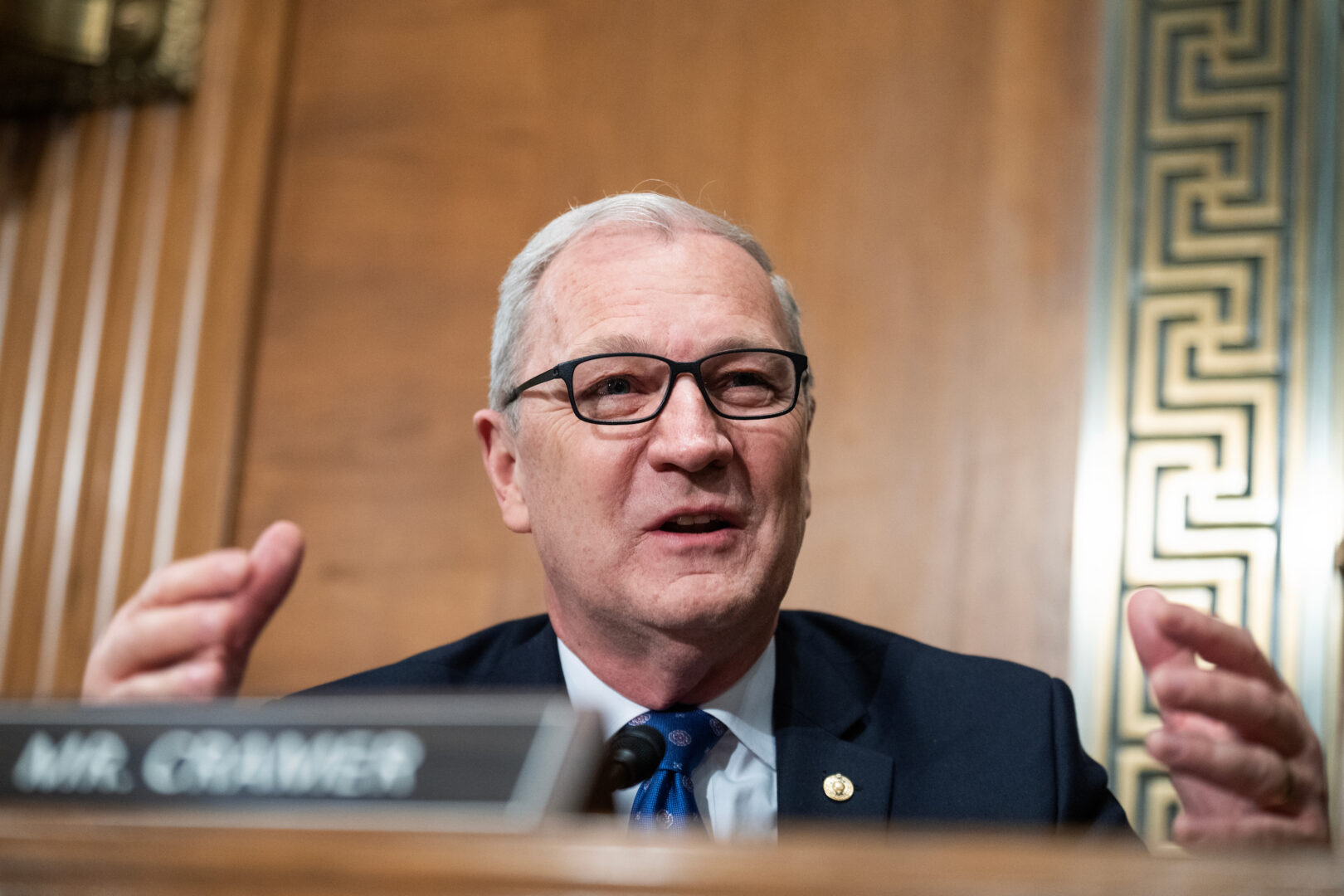
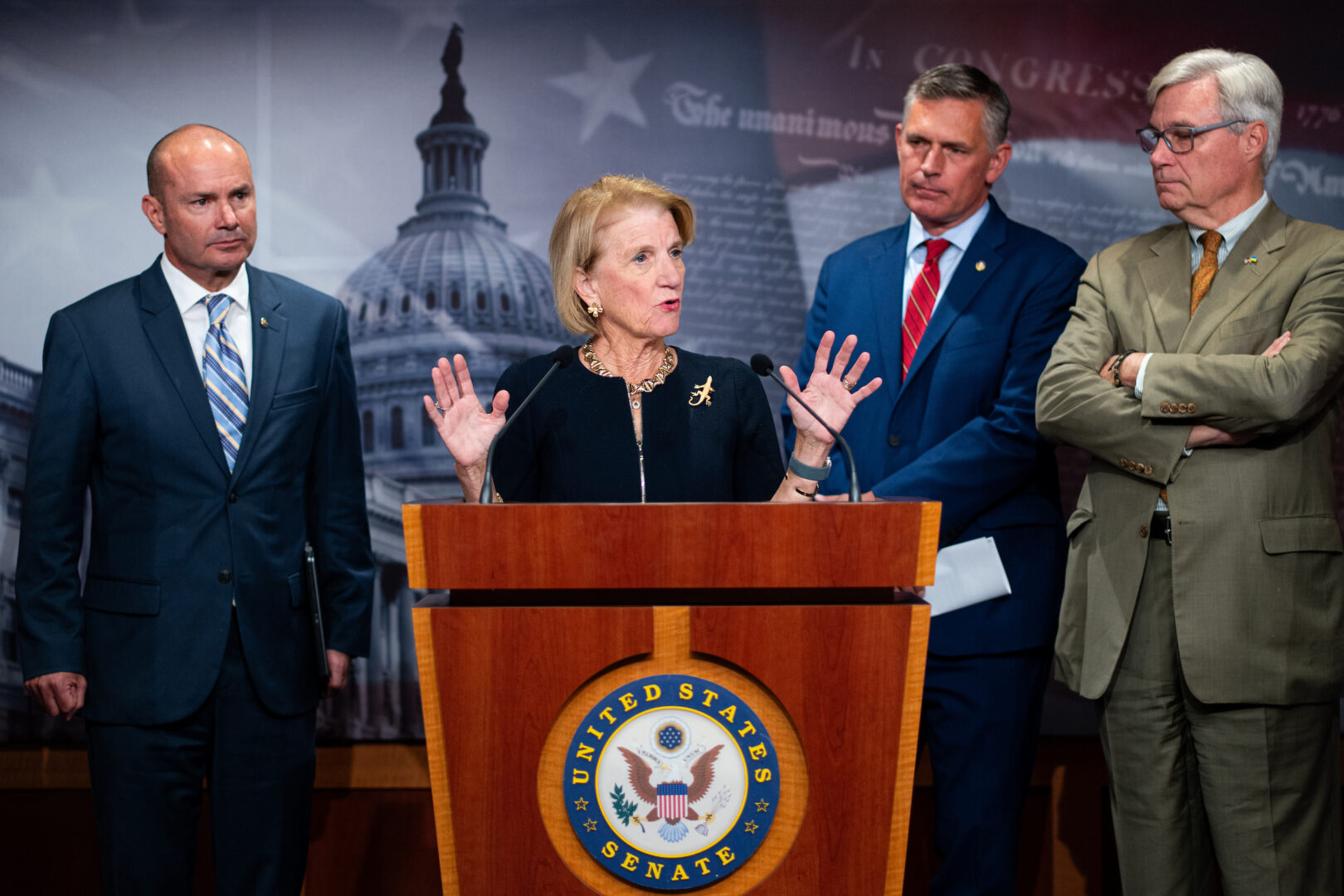
Sen. Kevin Cramer, R-N.D., said Thursday that he expects Republicans to attempt another budget reconciliation package in the lame-duck session with a boost to defense funding — along with action to lift the debt ceiling, either in a bipartisan fashion or as part of that package. Lawmakers are facing a short runway to get any legislation across the finish line before the end of the year, and the results of the midterm elections could further impact their calculus. If Republicans lose control of either chamber, the two-month sprint would be their last chance to pass another filibuster-proof reconciliation package, while Democrats could become more hesitant to agree to a debt limit deal. Republicans abandoned a push to pass a third party-line reconciliation package before the midterm. The proposed bill would provide around $100 billion for defense spending and farm aid, while also implementing some voter ID measures that the Trump administration has championed. Some Republicans are optimistic about the prospect of passing a reconciliation package in the waning weeks of the year, while others worry that additional outstanding priorities, like appropriations bills, the annual defense authorization bill and a permitting overhaul could leave little time for such a package. Republicans and Democrats alike, meanwhile, have suggested that the debt limit could see some action in the lame-duck session. House Minority Leader Hakeem Jeffries, D-N.Y., for example, suggested in September that addressing the issue could be on the agenda after the midterm elections. The federal debt exceeded $40 trillion for the first time last month, and lawmakers last raised the debt ceiling to $41.1 trillion in Republicans' 2025 budget reconciliation law. Without another increase, the Treasury would run out of enough cash and emergency accounting measures to pay all the government’s bills on time by late 2027 or early 2028, based on current estimates. President Donald Trump has called on lawmakers to raise the debt limit before the end of this year, punting the next deadline until at least after he leaves office. Cramer said the debt limit should be addressed in the lame-duck session, while Republicans have the majority. While he would prefer to reach a bipartisan deal to raise the limit, he said, a partisan reconciliation bill that encompasses a debt limit increase should be the default if Democrats are unwilling to negotiate. “We have to do debt limit. I don't care how we do it, necessarily,” said Cramer, who spoke with reporters after presiding over a pro forma session of the Senate Thursday. “I prefer debt limit to not have to be reconciliation. But if Democrats are going to be reckless enough to not help, I'm open to that.” Sen. Bernie Moreno, R-Ohio, was also bullish earlier this month on the prospect of tackling both budget reconciliation and the debt limit in the lame-duck session. However, Sen. Shelley Moore Capito, R-W.Va., a senior appropriator, said this month that she was “not ready to make that prediction” when asked if Republicans would see movement on a potential reconciliation package. Rep. Lloyd K. Smucker, R-Pa., who is in the running to lead Republicans on the House Budget Committee in the 120th Congress, told reporters after a pro forma House session Thursday that he hoped his party would pursue a reconciliation package after the election, with a focus on targeting waste, fraud and abuse, though he acknowledged that the future of such a package is "hard to predict." "Of course, the results of the midterm will influence everything," Smucker said. "But even so, regardless of the outcome, we could do a reconciliation package, and I hope that we would." The debate about a third reconciliation package also comes as appropriators are trying to hammer out a final set of fiscal 2027 spending bills before stopgap funding runs out after Dec. 11. Smucker said he expected both the House and the Senate to "do our job" in the lame-duck session, and anticipates that Congress will pass some sort of funding bill to avoid a shutdown. The typically bipartisan appropriations process has become more fraught since the start of the second Trump administration, leading some lawmakers to worry about the prospect of passing full-year bills. Budget reconciliation bills could be one of the only avenues to increase federal spending for fiscal 2027, especially with regards to certain Republican priorities. “I think we have to prepare for a worst-case scenario, which is a CR [continuing resolution] through this fiscal year,” Cramer said. “And in that scenario, we have got to plus-up our national defense in a big way, and reconciliation may be the only way to do it.”