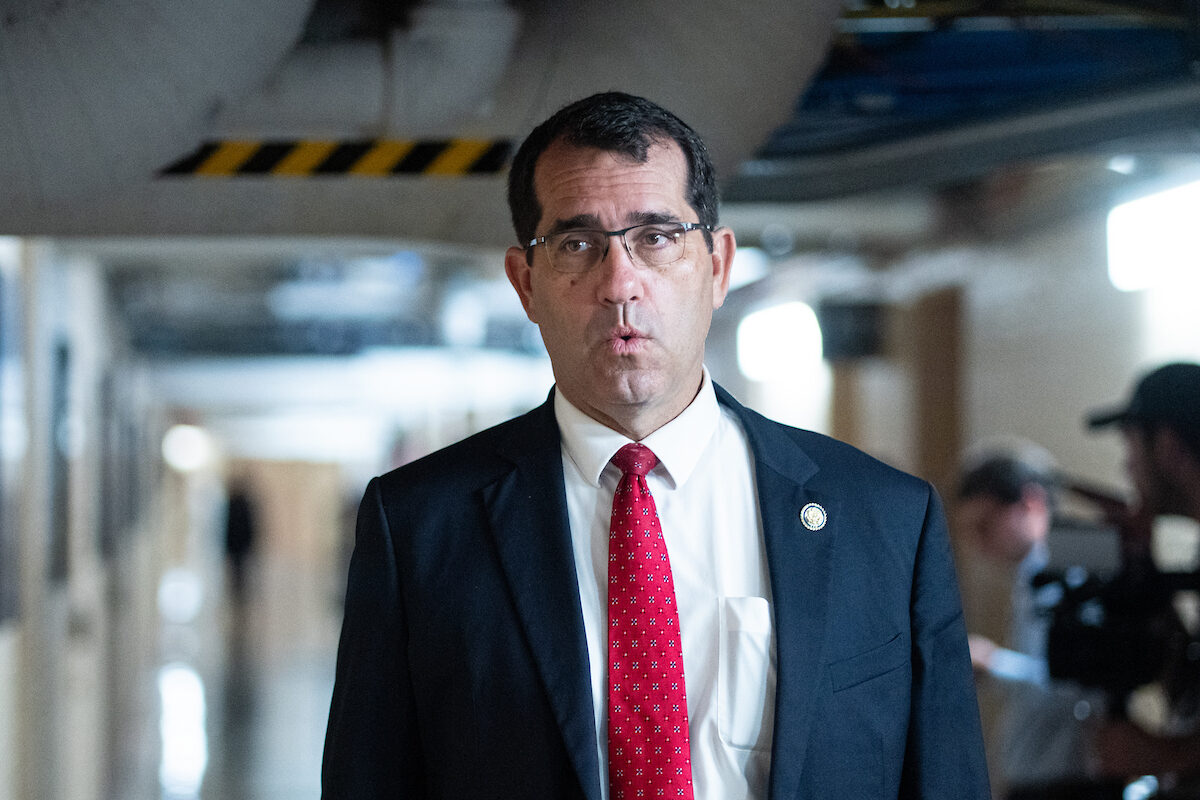
Old habits die hard for Republican Rep. Harold Rogers — at least when it comes to earmarks. Known by his critics as the “Prince of Pork,” the long-time appropriator over the years earned a reputation for bringing largesse to his Kentucky district, catching criticism for funneling tens of millions in earmark money to entities he had close ties to. Now, in the time since Congress returned to earmarks in 2021 after a decadelong ban, the 88-year-old lawmaker appears to have resurrected his old ways. Rogers has earmarked more than $30 million in funding since then to three nonprofits he has helped launch, and has requested an additional $22.5 million for two of the organizations for fiscal 2027, a review by CQ Roll Call found. There’s no indication the approach violates House restrictions that govern earmark funding. But critics of the spending practice say it underscores a shortcoming in earmark rules, another folly of a system that still allows individual lawmakers to steer taxpayer money to pet projects associated with their own legacies. Rogers defended his earmark spending in a written statement, saying the nonprofits’ work has addressed pervasive challenges in eastern Kentucky. The Republican noted his time as a House appropriator and said he has secured funding for southern and eastern Kentucky “that, otherwise, had no chance of getting the attention of bureaucrats in Washington.” Joshua Sewell, director of research and policy at Taxpayers for Common Sense, said the situation — in which Rogers has directed money to nonprofits he helped launch — raises questions. “Are they getting funding because this is what's familiar or because they are what's most effective?” Sewell said. “It brings up the question of: What are you not funding because they received funding?” There might be more deserving projects, he said, ones that might have a greater impact on the community or a greater return on investment for taxpayers. “But we don't even give them a chance because we're funneling money to this favored nonprofit of one of the most senior folks writing the bills,” Sewell said. The Center Rogers is one of the oldest members in Congress, a perennial figure on the powerful House Appropriations Committee and the dean of the House, a designation given to the chamber’s longest continuously serving member. Before lawmakers prohibited earmarking, Rogers over the years directed millions of dollars to three nonprofits he helped launch: The Center for Rural Development, Operation UNITE and Eastern Kentucky PRIDE, according to earmark data compiled by Citizens Against Government Waste. Rogers was responsible for stipulating more than $20 million for the entities before the prohibition, according to the data. Since the return of earmarks, Rogers has appeared to go back to the funding practice. Rogers has come in third among House lawmakers for solo project requests in proposed fiscal 2027 funding bills, a CQ Roll Call tally found. Of the earmarks Rogers has secured for three nonprofits since the return of the funding practice, a $20 million earmark to The Center for Rural Development in the fiscal 2026 budget is the largest. Rogers, in a letter last year to key appropriators, said the funding would be used “to administer grants to local city and county law enforcement agencies to upgrade their technology equipment.” He’s requested another $20 million in funding for the nonprofit for fiscal 2027. Many times, when earmarking money for law enforcement technology, lawmakers will identify a specific local government or local law enforcement agency the money should go toward, instead of a nonprofit entity like The Center for Rural Development. Rogers, in the written statement, said members are limited when it comes to the number of earmark requests each year. The one request provides the opportunity to “funnel federal funding to multiple law enforcement agencies through a grant process,” Rogers said in the statement. “This earmark provides the opportunity to reach the greater equipment needs that many of our rural police departments and first responders share, rather than only being able to help one or two of them,” he said in a statement. The center itself has long been associated with Rogers. The organization devotes a portion of its website to Rogers and his public service career and the site says the center was created in the 1990s “through the vision” of Rogers and others. The center’s website says the nonprofit’s flagship youth program, “Rogers Scholars,” is named after the congressman. The center also coordinates the “Rogers Explorers” program and the “Rogers LEADS” program, according to their websites. In the past, the center has been referred to as the "Taj Ma-Hal.” In 2005, The Washington Post reported that the Harold "Hal" Rogers Leadership Award, “an etched-glass bust” of the Republican, sat on a pedestal in the center’s lobby. Operation UNITE Rogers, since the return of the funding practice, has also earmarked at least $5.9 million for Operation UNITE, a nonprofit the congressman launched in 2003 in response to reporting in a Kentucky newspaper that detailed the effect of drug abuse within Kentucky communities, according to the organization's website. People who have worked for Rogers also have ties to the nonprofit. Karen Kelly, who began as Rogers’ chief of staff in 2024, was previously the “founding President/CEO” of the organization, according to a press release from Rogers’ office. The latest round of funding, in the fiscal 2026 budget, included a $2 million earmark for the nonprofit. The money would go to prevention and treatment efforts through “school-based drug prevention clubs and their community anti-drug coalitions,” Rogers wrote in a letter to appropriators. He has requested an additional $2.5 million in funding for the nonprofit in fiscal 2027. Tom Vicini, president and CEO of Operation UNITE, said earmark money from Rogers has in part gone toward funding staff to conduct in-school drug prevention programming. “We're interacting with the kids, and they'll see us several times during the year, so that they know that we really value them and we care about their future,” Vicini said. Asked about concerns that Rogers is favoring the nonprofit through the earmark funds, Vicini said he thinks the congressman sees the need in the area to act on the drug problem. “He really wants us to use this money wisely,” Vicini said of Rogers. “And he does check, and we do talk to some of his liaison[s] at times, and they keep a close watch on what we're doing so that we are responsible stewards of the funding.” Rogers, in the written statement, said the earmark for the nonprofit was “money well-spent.” The congressman has requested earmark funding for Operation UNITE in every fiscal year since fiscal 2022, a pattern critics say only adds to the argument that it’s a favored nonprofit. Thomas Aiello, vice president of federal affairs at National Taxpayers Union, said if a topic is a priority, funding should go through an agency rather than left up to one lawmaker to pick where money goes. “There might be hundreds of other communities that could benefit from that similar amount, but because they don't have a champion on the House or Senate appropriations committee, their concerns might be pushed aside,” Aiello said. Eastern Kentucky PRIDE Rogers has earmarked at least $4.3 million for Eastern Kentucky PRIDE since the return of the spending practice. In one fiscal year, Rogers earmarked $1 million for the nonprofit. The congressman, in a letter requesting funding, said the money would be utilized to put in place septic tanks and connect households that are low-income to sewer lines. The nonprofit coordinates an initiative that Rogers and James Bickford, the past secretary of the Kentucky Natural Resources and Environmental Protection Cabinet, launched in the 1990s, according to a past website of the nonprofit. Efforts to reach the nonprofit were unsuccessful. Kelly, the congressman’s chief of staff, had also previously led the organization. However, the earmarks for Eastern Kentucky PRIDE were announced well before Kelly arrived as chief of staff in 2024.